
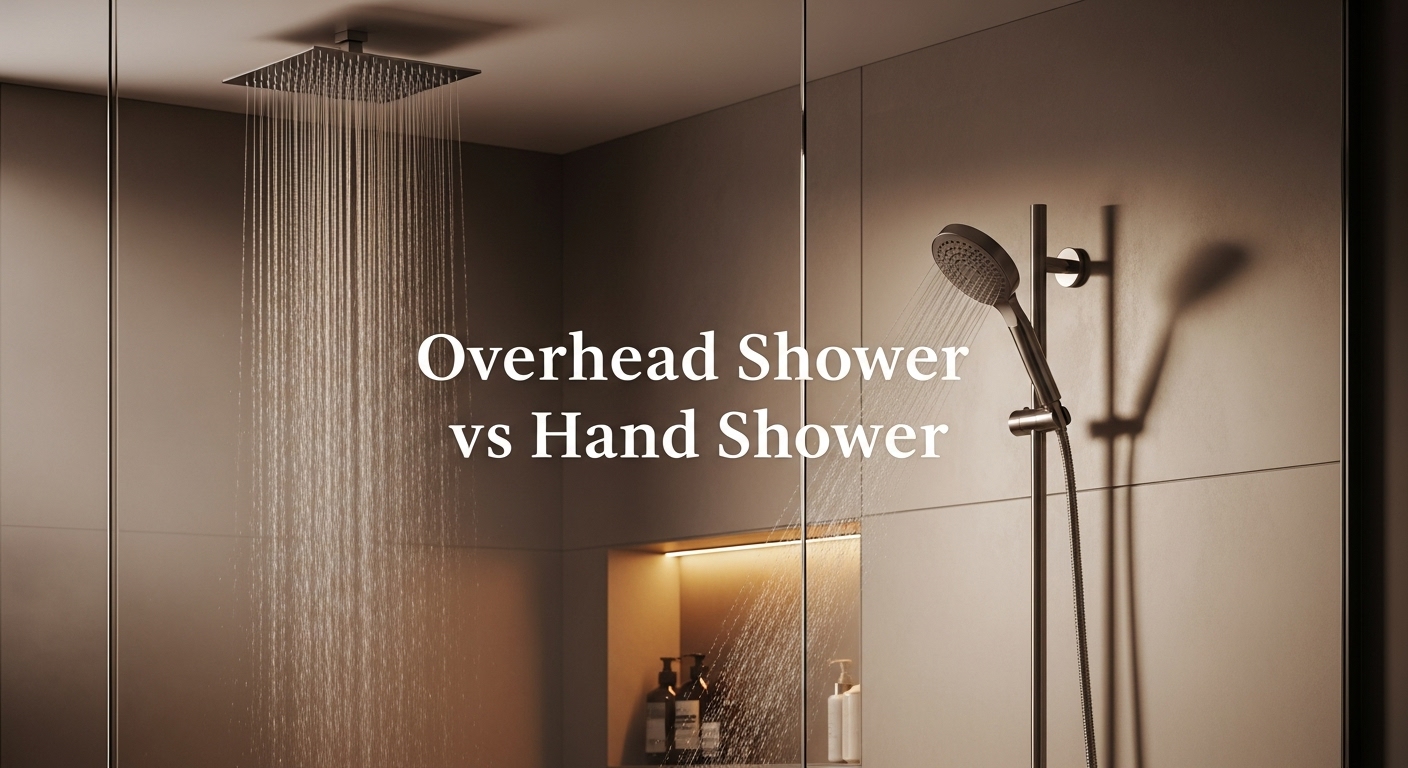
It is more important than people think to pick the proper shower for your bathroom. In Indian houses, bathing is more of a ritual than a routine, and, thus, several family members usually share the same bathroom. This is the reason why the difference between overhead shower vs hand shower is so widespread not only among homeowners but also among builders.
With challenges like low or fluctuating water pressure, hard water, limited bathroom space, and frequent daily use, selecting the right shower directly impacts comfort, water savings, and long-term maintenance. In this blog, we will compare both options in detail and help you decide the best shower for daily use based on real Indian conditions.
Why Choosing the Right Shower Matters for Daily Use
Picking a shower to go with your bathroom is probably a lot more thriving than you would think. In Indian homes, bathing is more than just a routine; it is a necessity that requires the bathroom to be used by different family members several times a day. That is why the discussion of overhead shower vs hand shower is so popular among homeowners and builders.
Most people pick up a shower based on the appearance only but the usability on a daily basis plays a much bigger role. A shower that is fancy looking but its performance is poor can quickly become a source of irritation.
In Indian families, the bathroom is a place used by kids, adults, and elderly members who sometimes have very different needs and abilities. Hence, it is very important that the bathroom shower chosen facilitates ease of use, safety, and water control. A nice bathroom shower for Indian homes is one that can give you comfort, save water, and can work well even if the water pressure is low.
Choosing the wrong shower can lead to:
- Higher water consumption
- Poor bathing experience
- Frequent maintenance issues
- Difficulty for kids and elderly users
What Is an Overhead Shower?
An overhead shower is definitely an upside fixed shower head that is placed above one’s head level either on the ceiling or using a wall-mounted arm. It lets water out evenly from the top, thus giving a rainfall-like showering experience.
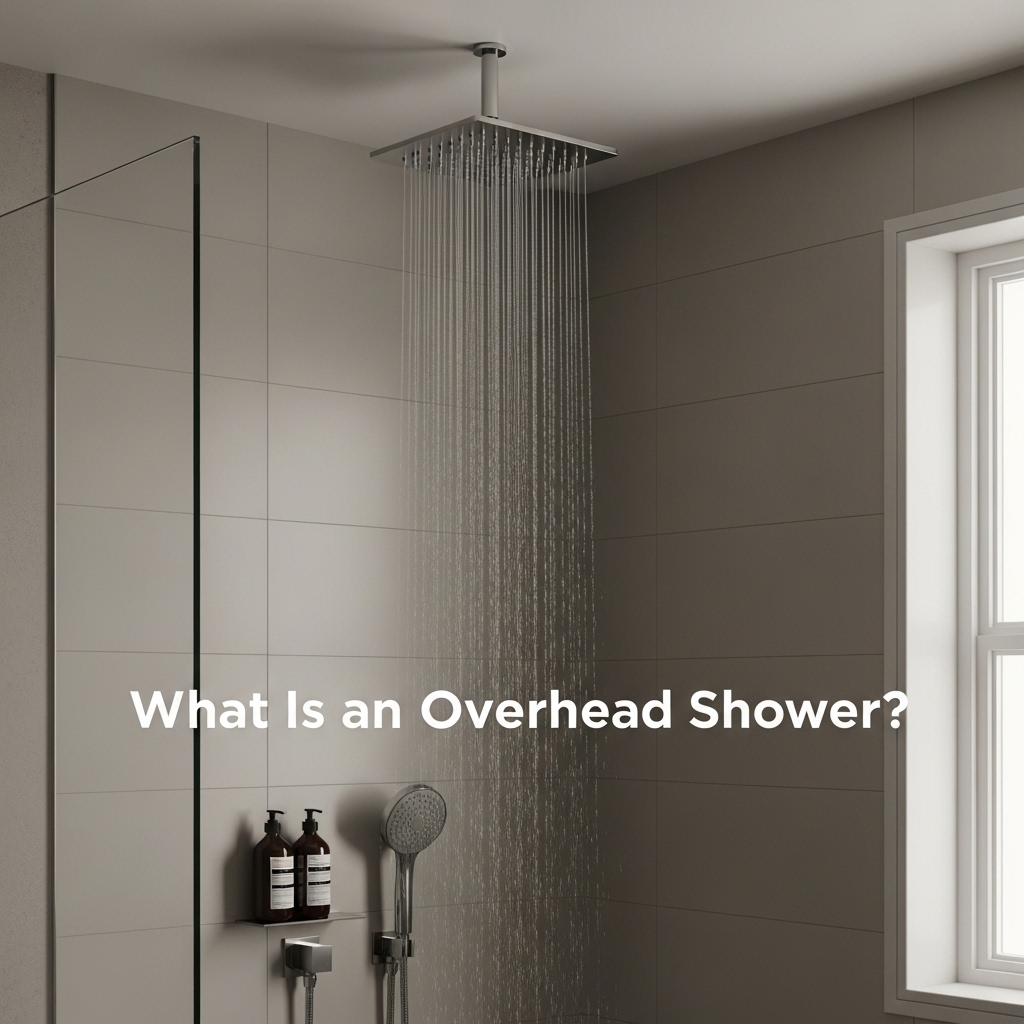
It is the attractive look among the common consumers; an overhead shower for daily use is counted as one of the most luxurious features which not only enhances the design and appearance of the bathroom but also turns your bath into a real experience. Such showers are mostly found in hotels and premium bathrooms.
Benefits of an Overhead Shower
- Wide water coverage for the entire body
- Hands-free bathing experience
- Adds a premium look to the bathroom
- Ideal for relaxed, long showers
Limitations in Indian Homes
An overhead shower has its benefits, but due to some reason it may not always be a workable option in Indian conditions. For instance, the shower needs constant water pressure to work efficiently. If you are using water from a low-pressure area or borewell, you may get a weak water flow. In addition, if the water is hard, then the shower holes will get blocked slowly leading to higher maintenance costs.
What Is a Hand Shower?
A hand shower is a detachable shower head connected to a flexible pipe. It can be held in hand or placed in a wall-mounted holder, allowing full control over water direction and flow.
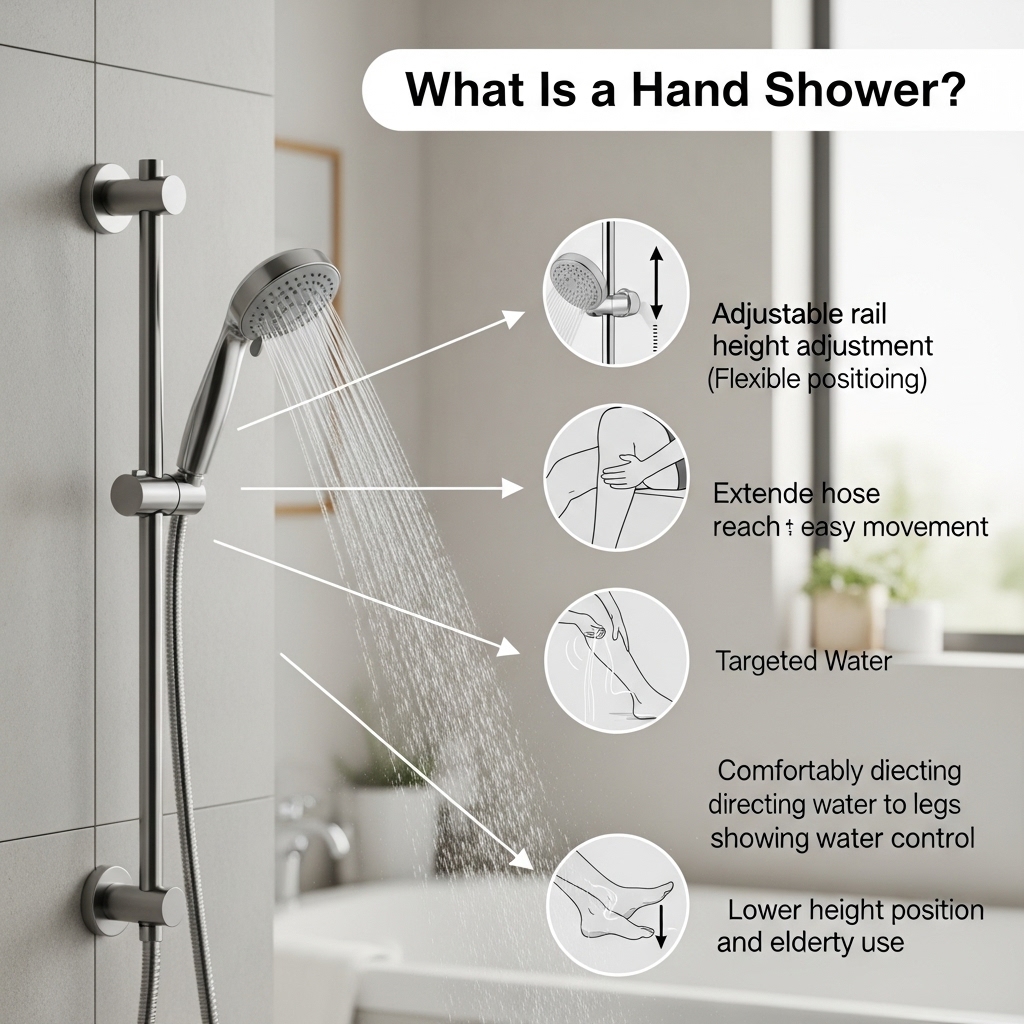
A hand shower for daily use is very popular in Indian homes due to its practicality and flexibility.
Benefits of a Hand Shower
- Works well even with low water pressure
- Allows targeted water usage
- Easy for children and elderly users
- Helps reduce water wastage
- Simple to clean and maintain
Unlike overhead showers, hand showers are designed for efficiency and control, making them ideal for everyday bathing routines.
Overhead Shower vs Hand Shower – Key Differences
Knowing the difference between overhead shower and hand shower allows the homeowners to choose wisely.
Water Coverage: Overhead showers are capable of giving wide, even coverage while hand showers deliver water right at the spot.
Water Efficiency: Generally hand showers are most water-efficient because users have the control of flow and direction. Therefore, these are the best option for the families that are water conscious.
Ease of Use: Hand showers can be handled very easily by people of any age. Overhead showers might be difficult for kids or elderly users.
Performance in Low Pressure: Water pressure plays a major role in the overhead shower vs hand shower comparison.Hand showers can deliver better performance under the condition of low pressure.
Maintenance: Hand showers can be easily cleaned and replaced. Overhead showers might be frequently descaled if in hard water areas.
Which Shower Is Better for Daily Use in Indian Conditions?
One has to consider Indian conditions first while deciding which is the best shower for daily use. Very often, people living in flats have to deal with fluctuating water pressure, especially at peak hours, that is water being used by most of the people at the same time. Water from the borewell generally contains minerals that cause limescale.
Due to these factors, a hand shower for daily use is, in fact, more suitable. It saves the water, functions well at low pressure, and is also more convenient to clean. There is nothing wrong with going for an overhead shower if water pressure is strong and stable at home.
Effect of Hard Water and Low Pressure on Showers
Hard water is undoubtedly a problem in a large number of cities in India. The buildup of mineral deposits can block the openings of a shower, releasing less water and thus impacting the overall performance.
Another advantage of hand showers is that they can be very easily cleaned and maintained. This feature naturally makes them a much more sensible option for the bathroom shower of Indian home that chronicles their bath water as hard. Ceiling showers might necessitate the frequent cleaning to keep the water flowing properly.
Hand showers also seem to be a very good solution in case the water pressure is very low because they are made in such a way to give the efficient flow of water even in difficult conditions.
Water Saving and Sustainability Benefits
The need for water conservation is rising fast in India. The largest amount of water used in any home goes to daily bathing.
Hand showers can reduce water wastage as they give the users the power of controlling both water flow and water direction. Against overhead showers, they also lead to taking shorter and more efficient showers thus, they are a good help for sustainable living.
Choosing the right shower can help you reduce your water bills every month extremely and, at the same time, you will be conserving water for the future.
Using Overhead and Hand Shower Together
Nowadays,the majority of bathrooms include both an overhead and a hand shower. Such an arrangement provides flexibility and convenience for different users.
Two shower units are perfect for families where some members enjoy relaxing under an overhead shower, while others prefer the accuracy of a hand shower. Given budget and space, this combo gives the ultimate experience.
Common Mistakes to Avoid While Choosing a Shower
- Ignoring water pressure conditions
- Choosing design over daily usability
- Not considering maintenance needs
- Overlooking water-saving features
Avoiding these mistakes ensures a better long-term bathing experience.
FAQs – Overhead Shower vs Hand Shower
Which shower is better for a daily bath?
A hand shower is generally preferred in most Indian kitchens because it is water efficient and easy to operate.
Does an overhead shower fit the requirements of Indian homes?
An overhead shower for daily use is perfect if the water pressure is stable.
Which shower is more water-efficient?
Hand showers usually are more water-efficient than overhead ones.
Is it possible to have both types of showers installed?
Yes, many modern bathrooms are equipped with both showers to allow for a greater degree of flexibility and comfort.