
Most people choose a shower the same way. They walk into a showroom, see a big flat head hanging from the ceiling, and decide on the spot that this is what their bathroom needs. A few weeks later, the plumber finishes the job, someone opens the tap, and a slow drizzle comes out.
That is the most common regret in the rain shower vs overhead shower decision. People compare looks and forget to compare what their water supply can actually handle. This guide covers both options in plain terms, so you can pick the one that suits your bathroom, your pressure and your budget.
What Is the Difference Between a Rain Shower and an Overhead Shower?
An overhead shower is any fixed shower head mounted above you, either on a wall arm or on the ceiling. Water falls downward, and you do not have to hold anything. You can see the full range of overhead showers we make, from small compact heads to larger ones.
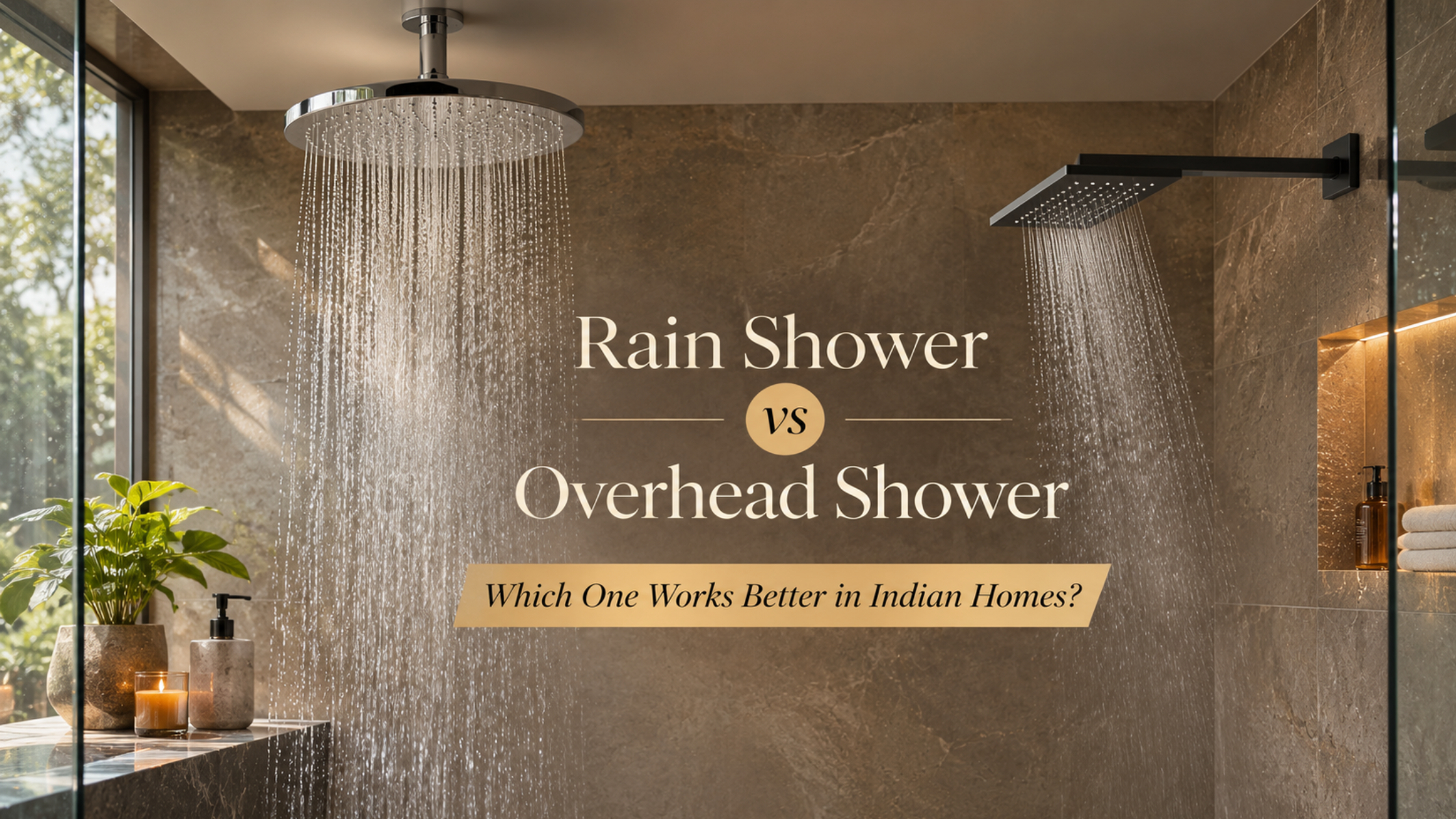
A rain shower is one type of overhead shower. It is a large, flat head, usually 200 mm or bigger, made to spread water softly over a wide area. So every rain shower is an overhead shower, but not every overhead shower is a rain shower. That is the main difference between a rain shower and an overhead shower. A regular overhead shower can be small, around 4 inches, with a firmer and more focused spray. A rain shower is bigger and gentler, and it feels like standing under rainfall instead of being sprayed.
Water Pressure Matters More Than Design
This is the part most showrooms skip. Most Indian homes run on an overhead tank, and a tank only gives gravity pressure. It does not push water the way a pump does.
Here is a rough idea of what to expect:
| Your water supply | Typical pressure | What works well |
| Top floor, tank 1 to 2 metres above the outlet | 0.1 to 0.2 bar | Hand shower, small overhead head |
| Lower floors, tank 3 to 8 metres above | 0.3 to 0.8 bar | Most overhead heads, one small rain head |
| With a booster pump | 1.0 to 2.0 bar | Large rain shower, two outlets together |
A big rain head works best at around 1 bar or more. That is why many homes with only tank supply need a pump before a rain shower feels right.
A Simple Bucket Test You Can Do at Home
You do not need any tools. Remove the shower head, keep a 5-litre bucket under the pipe, open the tap fully and note how many seconds it takes to fill. Divide 300 by that number to get your flow in litres per minute.
- If it fills in 20 seconds, your flow is about 15 litres per minute. That is good for almost any head.
- If it takes 40 seconds, your flow is about 7.5 litres per minute. A large rain head will feel weak here.
Do this test before you buy anything.
Is a Rain Shower for Low Water Pressure Possible?
Yes, but you need to be realistic. A rain shower for low water pressure can work if you do one of these three things:
- Choose a smaller head. A 150 to 200 mm head keeps the flow concentrated and works better on gravity pressure than a wide 300 mm one.
- Add a booster pump. If you really want a large head, plan the pump from the start, not after the shower disappoints you.
- Keep a hand shower as the main outlet. It works even on very low pressure and still does the daily job.
On the top floor of an apartment, the first or third option is usually the sensible choice. If you are shopping for rain showers, check the minimum pressure the product asks for before you pay.
Rain Shower Size and Mounting Height
Overhead heads in India usually range from 150 mm to 300 mm. The right rain shower size depends on your bathroom and your pressure:
- Small or shared bathroom: 150 to 200 mm is enough.
- Larger bathroom with a walk-in space: 250 to 300 mm looks better and covers more area.
Height matters too. Keep at least 20 to 30 cm of clear space between the head and the tallest person at home. Most wall-mounted heads end up around 7 feet from the floor, but measure for your own family first, because a head that is too low is irritating and one that is too high splashes water outside the shower area.
A bigger head also spreads the same flow over more holes, so it feels lighter. Many people open the tap more to compensate and use more water without noticing.
Ceiling Mounted vs Wall Mounted Rain Shower
You can fix the head in two ways, and the choice changes your plumbing work.
- Ceiling-mounted gives the closest feel to real rainfall because the water drops from straight above. The pipe has to come through the ceiling, so you must decide this before the tiles and false ceiling are done. Changing it later means breaking things.
- Wall-mounted uses a shower arm that extends from the wall. It gives a similar effect with a much simpler setup, and it suits flats, rented homes and old bathrooms where you do not want to open the ceiling.
In the ceiling-mounted vs wall-mounted rain shower question, most Indian homes are better off with wall mounted unless the bathroom is being built from scratch.
Hard Water and Cleaning
If you live in Delhi, Jaipur or any city with hard water, think about this before buying. Hard water leaves white scale on the small holes of the shower head. When the water starts spraying sideways, or in thin streaks, scale is usually the reason.
A large rain head has many holes, so it can clog in more places. Look for heads with soft silicone nozzles, because you can rub them with a finger to push the scale out. Soaking the head in a bowl of water mixed with white vinegar for an hour, once every month or two, also keeps it working.
Rain Shower with Hand Shower: The Setup Most Homes Need
The rain shower vs overhead shower comparison is useful, but in real bathrooms many people end up using two outlets. The common setup is a rain shower with hand shower, connected through a diverter that switches the water between them. A good diverter and concealed body matter here, because it sits inside the wall and is hard to change later.
A hand shower also does jobs the fixed head cannot. It is useful for bucket baths, washing the floor and walls, cleaning the bathroom accessories and bathing children or elders. The overhead head is for the relaxed daily shower, and the hand shower handles everything else.
If you add a hand shower, buy a good hose. A weak flexible tube is one of the first parts to crack or kink, and replacing it inside a finished bathroom is a nuisance.
Rain Shower Price in India and Overhead Shower Price in India
There is no single price, and anyone who gives you one number is guessing. The rain shower price in India and the overhead shower price in India both depend on four things:
- Material: ABS plastic is the cheapest. Brass and stainless steel cost more and last longer.
- Size: A 12-inch head costs far more than a 4-inch one.
- Finish: Chrome is the base price. Black, gold and rose gold usually cost extra.
- Brand and warranty: Small plastic heads can cost only a few hundred rupees. Large brass or steel heads go into the thousands.
Also add the cost of a booster pump if your pressure needs it, and the cost of concealed plumbing if you want a ceiling mount. That is where the final bill usually jumps.
Which One Should You Choose?
The best shower for Indian bathroom conditions depends on your floor, your pressure and your bathroom size. Use this as a quick guide:
- Top floor flat on tank supply: a small overhead shower (150 to 200 mm) with a hand shower.
- Ground floor house with a booster pump: a large rain shower with a hand shower.
- Small bathroom: a wall mounted overhead shower of about 200 mm.
- Renovation without opening the ceiling: wall-mounted arm, not ceiling mount.
- Hard water area: silicone nozzles, whichever type you pick.
- Elders or children at home: always add a hand shower.
Frequently Asked Questions Related to Rain Shower vs Overhead Shower
Is a rain shower better than an overhead shower?
Not always. A rain shower feels softer and covers more area, but it needs more pressure. If your pressure is low, a regular overhead shower works better.
Can I install a rain shower with tank water?
On lower floors, yes, if the tank is high enough. On the top floor, you will probably need a booster pump or a smaller head.
What size rain shower is best for an Indian bathroom?
For most bathrooms, 200 mm is a safe size. Go bigger only if you have the space and the pressure.
How high should I fix the shower head?
Keep at least 20 to 30 cm of gap above the head of the tallest person in your home.
Do rain showers waste more water?
Not by design, but a large head feels lighter, so people often open the tap more. That is where the extra water use comes from.
Final Word
The rain shower vs overhead shower choice looks like a style question, but it is really a pressure and plumbing question. Run the bucket test, decide where the pipe will come from before the tiles go up, and pick the size your supply can support. A modest head that works properly is better than an expensive one that dribbles.
When you are ready to choose, you can see the complete shower range at Agmeco and compare finishes and sizes in one place.